
The lure of a DIY pressure wash is easy to understand. On a sunny Queensland Saturday, there is something deeply satisfying about watching years of grime and Brisbane dust vanish under a blast of high-pressure water. You head to the local hardware store, hire a machine, and envision a sparkling home by lunchtime.
However, what looks like a simple cleaning task is actually a high-stakes balancing act of pressure, chemistry, and technical skill. In our years of providing Queensland Quality property maintenance, we have seen countless well-intentioned DIY projects end in permanent surface damage, water ingress, or personal injury.
In this guide, we walk through the real-world risks of exterior cleaning, comparing the DIY pressure wash approach with professional exterior cleaning methods, and explaining why “more pressure” isn’t always the answer for your home.
What is a DIY Pressure Wash?
A DIY pressure wash involves hiring or buying a high-pressure water spray unit to clean the exterior surfaces of your home yourself. These machines are designed to blast away built-up dirt, mould, mildew, algae, and general grime from driveways, walls, roofs, and decking.
Many Queensland homeowners are drawn to the idea because it seems affordable, convenient, and satisfying. However, without the right technique and equipment, even a simple exterior clean can cause more harm than good.
The Science of Cleaning: Pressure (PSI) vs. Flow (LPM)
Most homeowners focus on PSI (Pounds per Square Inch), assuming that higher pressure means a better clean. This is one of the most common misconceptions in home exterior maintenance.
In reality, professional cleaning is governed by LPM (Litres Per Minute).
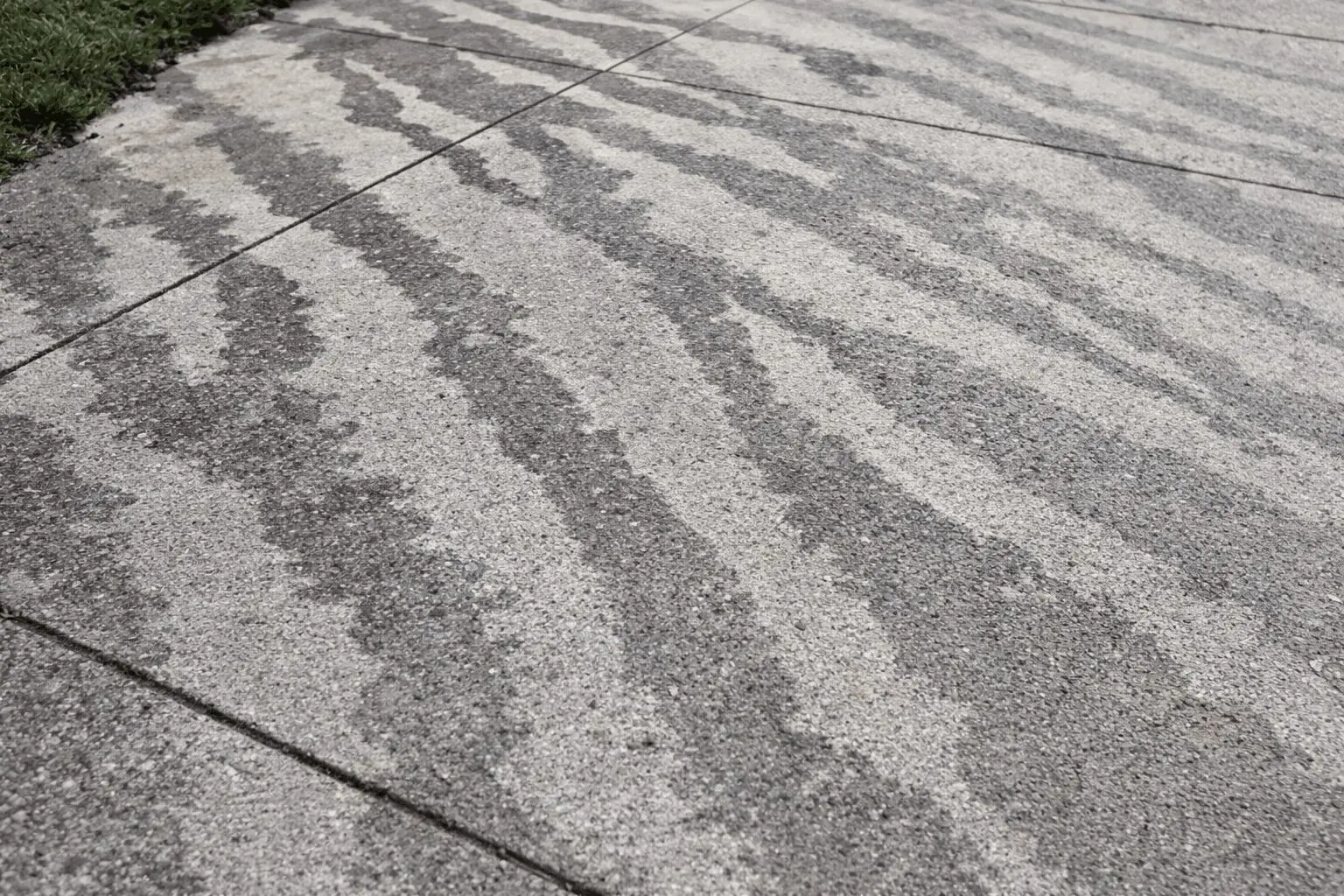
- DIY machines typically run high PSI but low flow volume (around 7 to 9 litres per minute). This forces you to hold the nozzle dangerously close to the surface to get results, which leads to etching or tiger stripes.
- By contrast, our professional equipment delivers 21 to 27 LPM. This high volume of water allows us to sweep away dirt and organic growth using much lower pressure, protecting your home’s surfaces while achieving a deeper clean.
The Hidden Risks of a DIY Pressure Wash
While it might seem like you’re saving money, the hidden costs of an amateur clean can be staggering. Here is where most DIY attempts go wrong:
1. Surface Etching and Stripping
Standard concrete might look tough, but high pressure can easily strip the “cream” (the smooth top layer) off your driveway. Once etched, the concrete becomes permanently rough and porous, attracting mould and oil stains much faster than before.
2. Forcing Water Into Wall Cavities
A common DIY pressure wash mistake is pointing the nozzle upward near eaves or windows. This forces water behind weatherboards, into wall cavities, and under roof sarking. This unseen moisture leads to internal timber rot and toxic mould growth that you may not discover for months.
3. Damaging Delicate Render and Paint
Modern Queensland homes often use acrylic render or high-quality paint finishes. A 3000 PSI blast from a rental machine can peel paint like an orange or leave permanent gouges in soft render that require costly patching and repainting.
Why Soft Washing is the Professional Standard
At QQCPM, we rarely rely on brute force. Instead, we use soft washing. It is the go-to method for treating delicate surfaces without the risk of damage.
The Soft Wash Process:
- Chemical Application: We apply a biodegradable, plant-safe solution that kills mould, algae, and lichen at the root.
- Dwell Time: The solution sits for several minutes, breaking down the biological bond between the grime and your home.
- Gentle Rinse: We rinse the surface with a high-volume, low-pressure stream, similar in force to a garden hose.
The result? A home that stays cleaner for up to four times longer because the spores are actually dead, not just blasted around.

Topical Deep Dive: Cleaning Different Surfaces
| Surface Type | DIY Pressure Wash Risk | Professional Approach |
| Roof Tiles | Cracked tiles, stripped granules, water leaks. | Roof cleaning using low-pressure chemical treatment. |
| Solar Panels | Micro-cracks in glass, electrical hazards. | Solar panel cleaning with de-ionised water and soft brushes. |
| Timber Decks | Splintering timber fibres, furring of the surface. | Chemical wood restoration and low-pressure rinsing. |
| Gutters | Ladder falls, splashing mud onto clean walls. | Gutter cleaning using a specialised vacuum or manual removal. |
| Driveways | Etching, tiger stripes, and uneven finish. | High-volume flat surface cleaners for a uniform look. |
The Safety Factor: Beyond the Machine
Beyond property damage, a DIY pressure wash carries significant personal risk.
- Ladder Safety: Combining the kickback from a high-pressure unit with a wet, slippery ladder is a recipe for disaster.
- Injection injuries: A high-pressure stream can pierce human skin, forcing water and bacteria into the bloodstream. This is a medical emergency that requires immediate surgery.
- Electrical Hazards: Spraying water near outdoor power points, lights, or solar inverters without proper insulation knowledge can be fatal.
Helpful Tips for Homeowners
If you still decide to tackle a small area yourself, follow these professional tips:
- Test a Patch: Always start on an inconspicuous area (like behind a water tank) to see how the surface reacts.
- Keep the Nozzle Moving: Never stay in one spot. Constant motion prevents heat build-up and etching.
- Protect Your Plants: Pre-wet your garden beds with a hose before you start. This ensures the plants are hydrated and won’t absorb any chemical runoff.
- Work from the bottom up, rinse top down: This prevents streaking as the cleaning agents work their way down the wall.