
Living in Queensland means enjoying beautiful sunshine, but it also means bracing for those sweltering summer days where the humidity feels like a heavy blanket. If you’ve noticed your air conditioner running nonstop from November through March, the culprit might be right over your head.
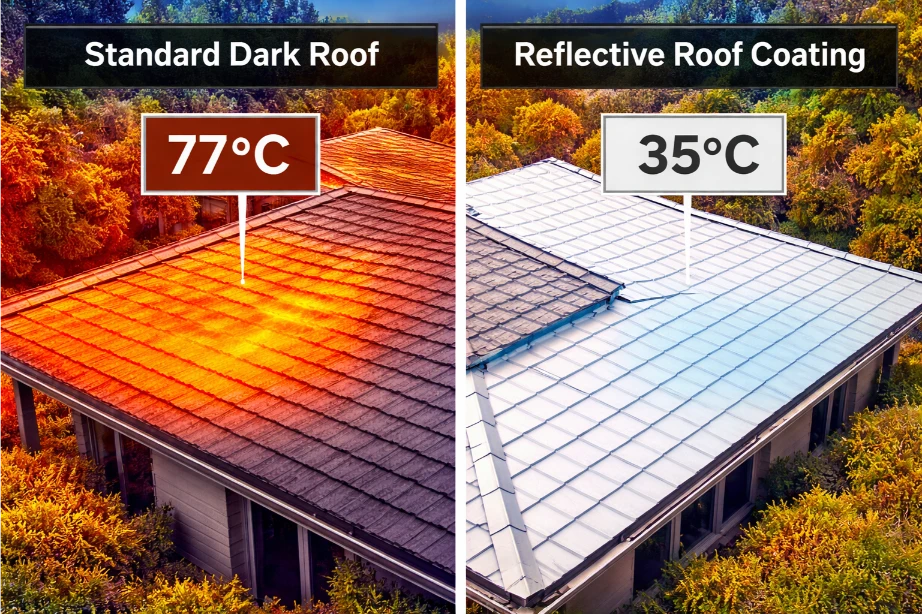
Your roof is the primary point of thermal contact for your home. Standard dark tiles or corroded metal sheets act like a giant heat sink, absorbing solar radiation and transferring that heat directly into your living spaces. With the right heat reflective roof coating, you can turn your roof into a thermal shield, noticeably reducing your energy consumption and improving overall comfort in your home.
The Science of Solar Reflectance and Thermal Emittance
To understand how a heat reflective roof coating works, we need to consider two scientific factors: solar reflectance and thermal emittance.
- Solar Reflectance: This refers to a material’s ability to reflect solar energy, including visible light, infrared, and ultraviolet radiation, back into the atmosphere. Traditional dark roofs may reflect only 5% to 10% of solar radiation, while a high-quality reflective coating can reflect up to 85%.
- Thermal Emittance: The roof surface’s ability to radiate heat it absorbs back out, rather than letting it seep into the ceiling cavity.
In the Queensland climate, combining these two factors creates a “Cool Roof” effect. This prevents the “oven effect” in your ceiling cavity, so your insulation isn’t overwhelmed and your air conditioner doesn’t have to work overtime to keep your home at a comfortable temperature.
Why Queensland Homes Need Heat-Reflective Paint
In cities like Brisbane and regions like the Sunshine Coast, temperatures frequently soar above 30°C. On those days, an untreated dark-coloured roof can reach surface temperatures of up to 70°C. By applying a specialised heat reflective roof coating, you can reduce the surface temperature by up to 20°C-30°C.
Lowering Cooling Costs
The most immediate benefit is the impact on your wallet. Research indicates that Australian homeowners can save between 15% and 30% on summer cooling costs by upgrading to a heat-reflective roofing system. When your home stays naturally cooler, your AC units cycle less frequently, extending their lifespan and reducing your quarterly electricity bill.
Protecting the Roof Structure
Queensland’s intense UV radiation causes roofing materials to expand and contract repeatedly, a process known as thermal cycling or thermal shock. Over time, this leads to cracked tiles, failing mortar, and brittle metal sheets. A reflective coating acts as a protective barrier, reducing thermal expansion and significantly extending the time between a full roof restoration or replacement.
The Roof Restoration Process: More Than Just Paint
Applying a heat reflective roof coating isn’t as simple as grabbing a roller and a tin of paint from the local hardware store. To achieve the promised energy savings, the application must be part of a professional, multi-stage process.
Step 1: Professional Cleaning
A coating will not bond to a dirty surface. The process begins with a deep roof cleaning using commercial-grade pressure systems. This removes lichen, moss, and decades of accumulated soot. Without this step, the reflective paint will peel within a few seasons.
Step 2: Repairs and Priming
Before the cool layer goes on, any cracked tiles must be replaced and repointing completed. A specialised primer is then applied to ensure the reflective topcoat adheres perfectly to the substrate, whether it’s terracotta, concrete tile, or Colorbond metal.
Step 3: The Reflective Topcoat
Finally, two coats of high-build reflective membrane are applied. This isn’t standard house paint; it is a thick, flexible membrane designed to withstand the harsh Australian sun and heavy tropical downpours.
Complementary Services for a Cooler Home
While a heat reflective roof coating is a powerhouse for energy efficiency, it works best as part of a holistic property maintenance plan.
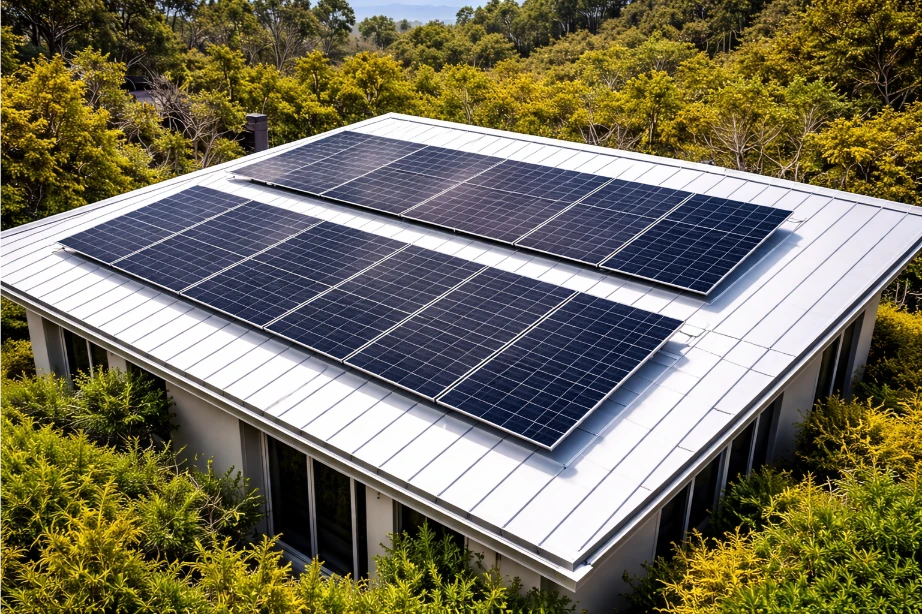
- Solar Panel Efficiency: Did you know that solar panels actually lose efficiency when they get too hot? Lowering the ambient temperature on your roof can improve your panels’ performance. Make sure you schedule a regular solar panel cleaning service to maximise these gains.
- Gutter Health: Heat-reflective coatings protect the roofline, but don’t forget the gutters. Clear, functional gutters prevent water damage during heavy summer storms. Our gutter cleaning service ensures your home is protected from top to bottom.
- Whole-House Aesthetics: A freshly coated roof looks incredible, but it can make a dirty exterior stand out. Many of our clients bundle their roof work with a full house wash to give the entire property a consistently fresh finish.
Environmental Impact: Reducing the Urban Heat Island Effect
By choosing a heat reflective roof coating, you’re not just helping your budget; you’re helping your community. In densely populated areas of Brisbane, the “Urban Heat Island Effect” occurs when dark surfaces (roads and roofs) absorb heat, making the entire suburb several degrees warmer than surrounding rural areas.
If more Queenslanders adopt reflective roofing, we can collectively lower ambient temperatures across our neighbourhoods, easing demand on the power grid during peak summer heat.