
There is nothing quite as frustrating for a Queensland homeowner as pulling the car out of the garage only to discover a fresh, dark patch of oil marring a perfectly clean driveway. Whether it is a slow leak from the family SUV or a spill from a weekend DIY project, oil marks are more than just an eyesore. They are stubborn, oil-based blemishes that can permanently damage your concrete if left untreated.
Learning how to clean up oil stains on driveway surfaces is an essential skill for maintaining your home’s kerb appeal and property value. However, not all cleaning methods are created equal. In the harsh Brisbane sun, oil can quickly “bake” into the porous structure of your concrete, making it significantly harder to remove as time passes.
In this comprehensive guide, we will walk you through the chemistry of oil spills, the most effective DIY home remedies, and when it is time to call in a professional for high-pressure restoration.

Why Oil Stains Are So Difficult to Remove
To understand how to clean up oil stains on driveway concrete, you first have to understand the nature of the surface. Concrete may look solid and impenetrable, but under a microscope, it is actually a giant sponge filled with millions of tiny pores (capillaries). When oil is spilled, gravity pulls it deep into these pores. Because oil is “hydrophobic” (it repels water), a simple hose-down will do almost nothing. In fact, adding water without a proper degreaser can actually spread the oil further, creating a larger stain. Over time, the oil oxidises and binds with the concrete’s lime and minerals, creating a permanent dark shadow.Step-by-Step: How to Clean Up Oil Stains on Driveway
If you have caught the spill early, follow these steps to minimise the damage.Step 1: Absorb the Excess (The Fresh Spill)
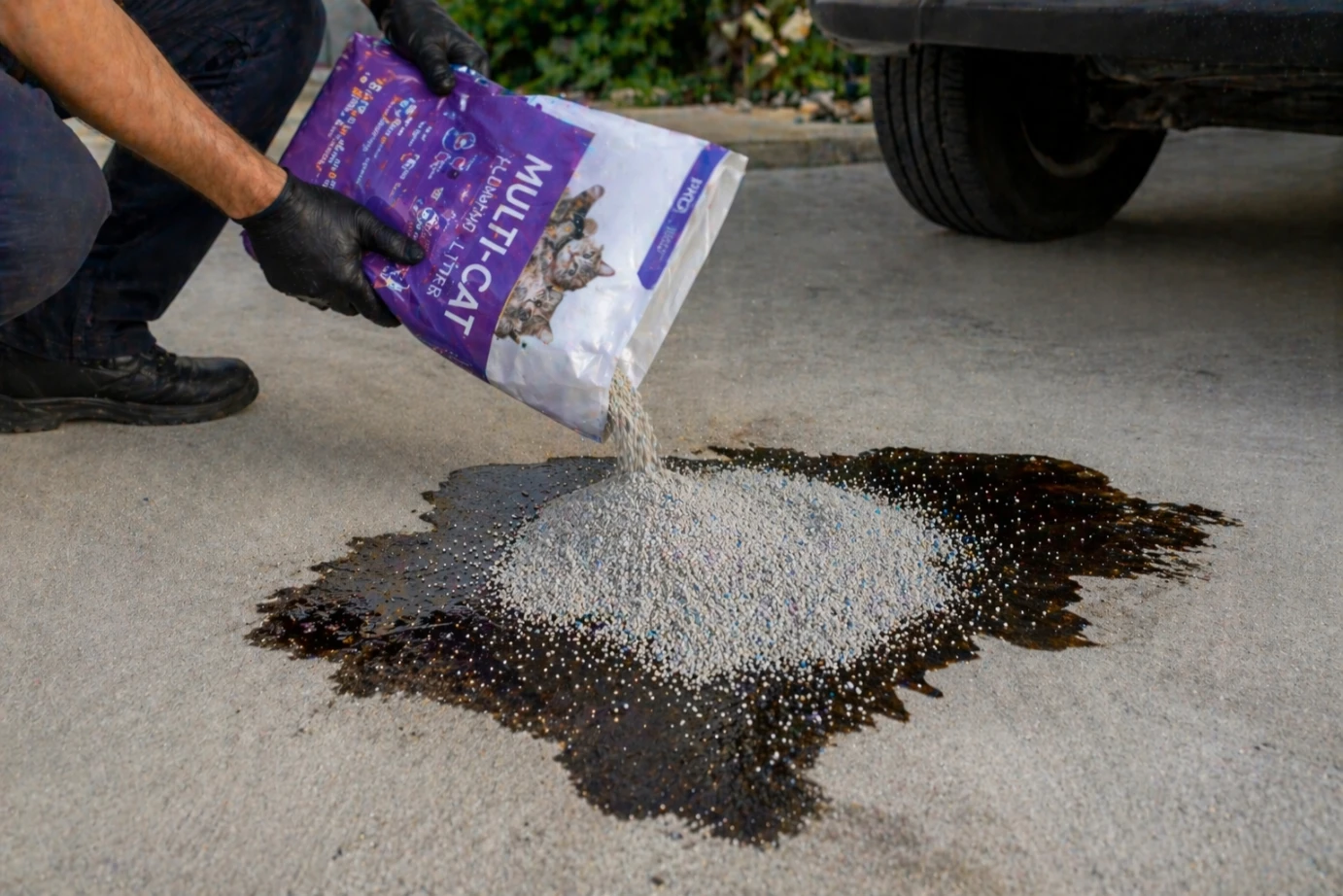
If the oil is still wet, do not scrub it. Scrubbing will only push the oil deeper into the concrete pores.- Action: Cover the spill with an absorbent material. While commercial “oil dry” products are best, common household items like kitty litter, sawdust, or even cornflour can work.
- Dwell Time: Leave it for at least 30 minutes (or overnight for large spills) to wick up the liquid.
- Disposal: Sweep up the saturated material and dispose of it in the bin.
Step 2: Apply a Strong Degreaser
Once the surface liquid is gone, you need to tackle the oil that has already soaked in.- DIY Option: For small household leaks, a high-quality grease-cutting dishwashing liquid (like Morning Fresh or Fairy) can work. Apply it neat to the stain.
- The Scrub: Use a stiff-bristled nylon brush to work the dishwashing liquid into the stain in a circular motion. Avoid wire brushes as they can leave metal particles that eventually rust.
- Rinse: Use very hot water to rinse the area. Heat helps to thin the oil, making it easier for the dishwashing liquid to lift it out.
Step 3: The “Poultice” Method for Old Stains
If you are wondering how to clean up oil stains on driveway surfaces that have been there for months, a simple scrub won’t be enough. You need to create a poultice.- The Mix: Create a paste using an absorbent powder (like baking soda) and a solvent (like acetone or a commercial degreaser).
- Application: Spread the paste over the stain and cover it with cling wrap to keep it from drying out too quickly.
- The Extraction: As the solvent breaks down the oil, the powder pulls it to the surface. Once dry (usually 24 hours), scrape off the paste and rinse.
When DIY Isn’t Enough: The Case for Professional Pressure Cleaning
While the steps above work well for minor drips and fresh spills, large-scale or aged “baked-in” stains usually require industrial intervention. This is where professional property maintenance services become essential.1. The Power of Heat and Flow
Most domestic pressure washers use cold water and low flow rates. Professional teams use hot water units and commercial-grade degreasers that are not available to the general public. This combination emulsifies the oil, allowing it to be sucked out of the concrete capillaries.2. High-Volume Surface Cleaners
A major risk of a DIY clean is leaving “tiger stripes” on your concrete. At QQCPM, we use flat surface cleaners that deliver 27 litres of water per minute (LPM). This ensures an even finish across the entire driveway, not just a clean spot where the oil used to be.3. Integrated Home Care
Often, a dirty driveway is just one part of the problem. If your car is leaking oil, chances are your garage floor needs attention too. We often bundle driveway restoration with house washing and gutter cleaning to give the entire property a fresh, clean start.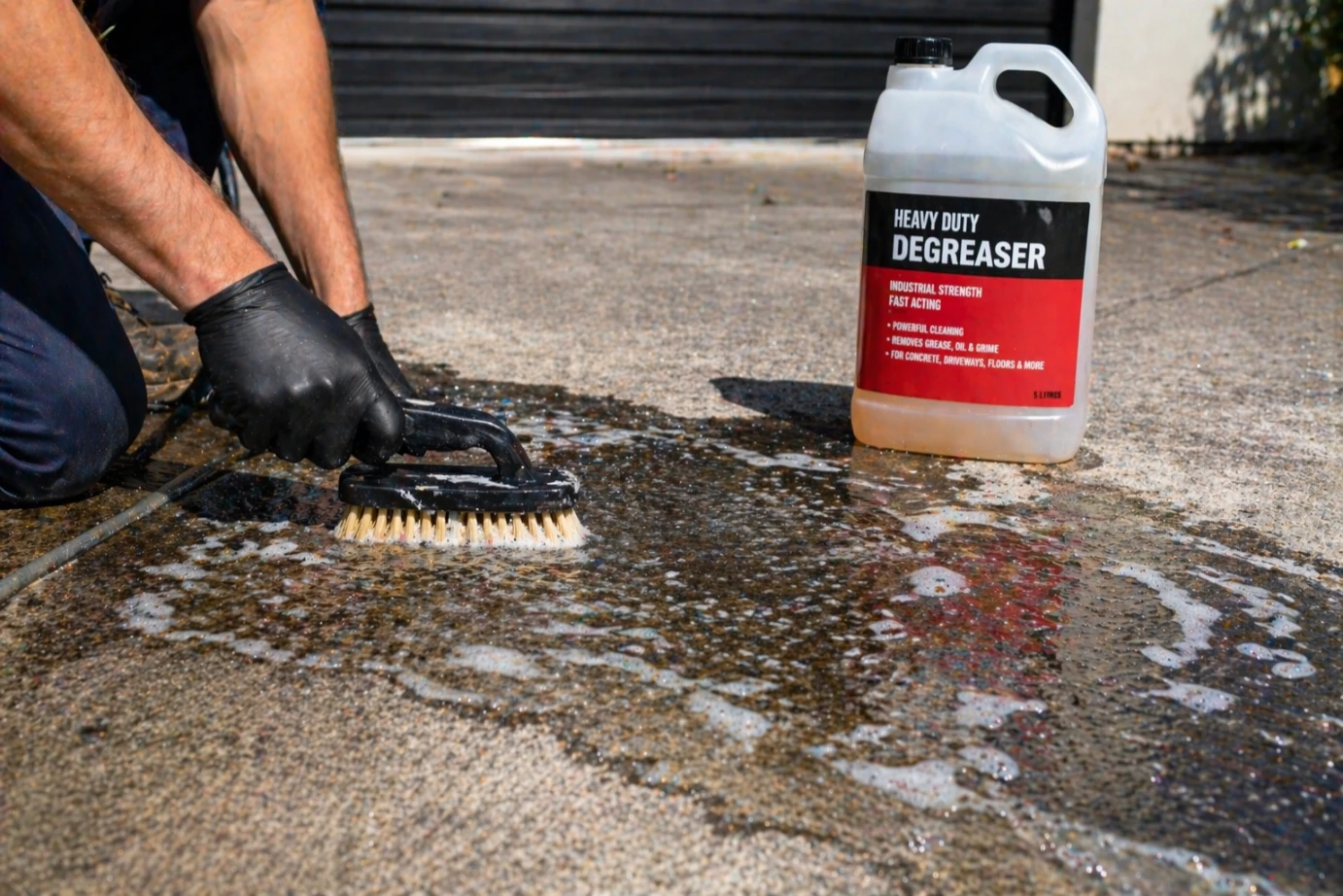
Protecting Your Driveway from Future Stains
Once you have successfully learned how to clean up oil stains on driveway concrete and restored the surface, the next step is prevention.- Concrete Sealing: This is the ultimate defence. A high-quality penetrating sealer fills the pores of the concrete, preventing oil from soaking in. Instead of a deep stain, the oil sits on top, allowing you to simply wipe it away.
- Drip Trays: If you have an older vehicle known for leaks, a simple drip tray or a piece of heavy cardboard in the garage can save you hours of cleaning.
- Regular Maintenance: Don’t let dust and soot build up. Regular roof cleaning prevents organic matter and pollutants from washing down onto your driveway during rain, which can hide fresh oil leaks.