
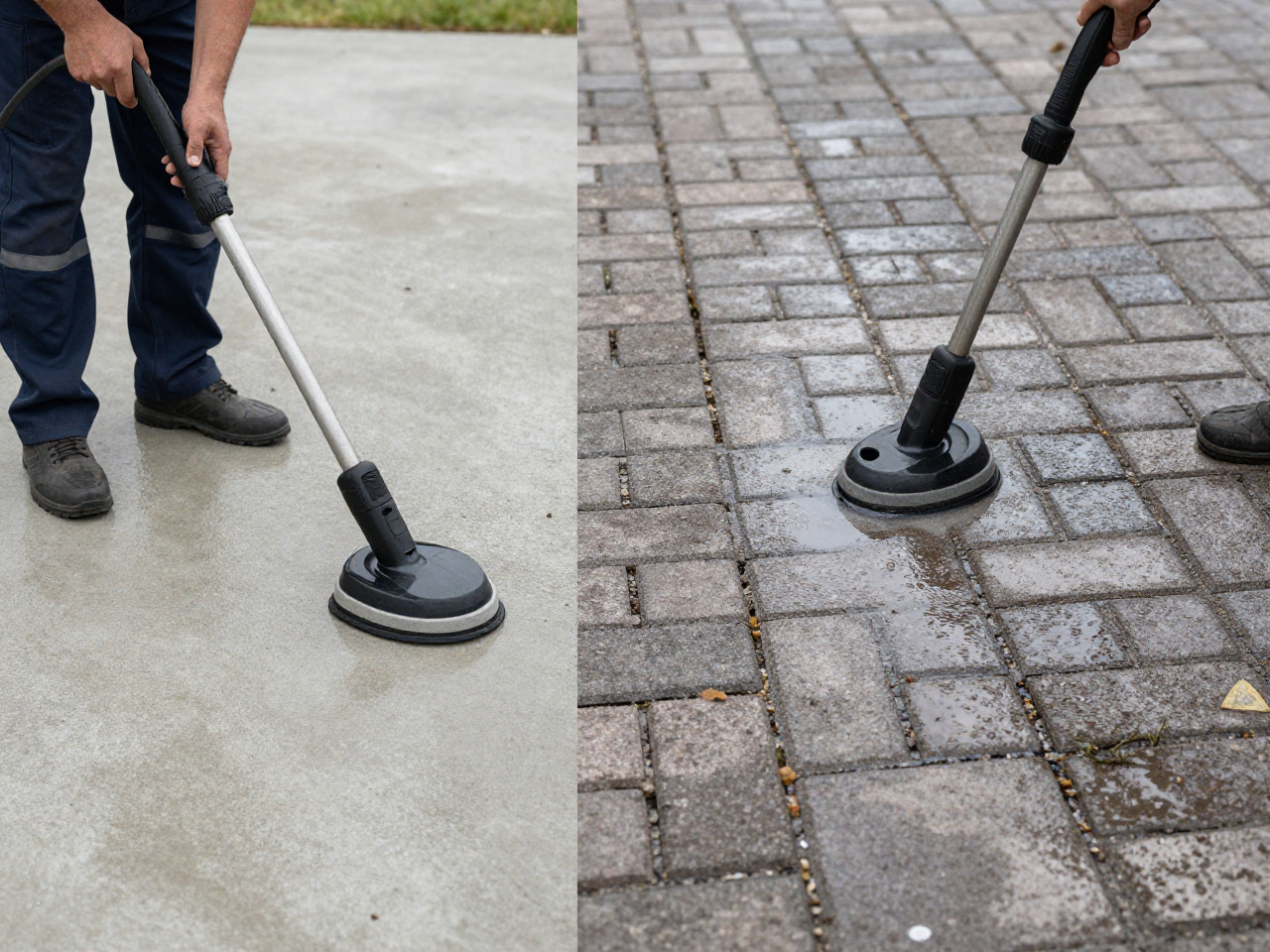
When it comes to pavers vs concrete, choosing the right surface is one of the most common dilemmas for homeowners in Brisbane and the Sunshine Coast. While both options offer durability, they react very differently to the harsh Australian sun, humidity, and coastal salt spray.
The choice between these two popular paving surfaces isn’t just about initial installation costs; it comes down to long-term maintenance. Each surface requires a specific cleaning approach to stay looking its best. Use the wrong technique and you risk etching your concrete slab or dislodging the jointing sand between your pavers.
In this guide, we break down the cleaning techniques required for concrete and paved surfaces, so your outdoor areas stay in top shape year-round.
The Core Difference: Porosity and Structure
Before diving into cleaning, we must understand the physical makeup of these surfaces.
Concrete is a solid, continuous slab. While it looks impenetrable, it is actually quite porous. It acts like a giant sponge for oil, grease, and tannin stains from fallen leaves. On the other hand, pavers are individual units bedded in sand. Their primary vulnerability isn’t just the block itself, but the joints between them, where weeds and moss thrive.
Cleaning Techniques for Concrete Surfaces
Concrete is the workhorse of Australian driveways. However, without the right care, it quickly becomes a canvas for black mould and unsightly tyre marks.
1. High-Pressure Water Blasting
For heavy-duty grime on concrete, high-pressure cleaning is often the go-to. Because concrete is a single dense mass, it can usually withstand higher PSI (pounds per square inch) than other surfaces.
- Best for: Driveways, garage floors, and public walkways.
- The Risk: Using too much pressure on green (freshly laid) concrete can strip the cream layer, leaving the aggregate exposed and rough.
2. Degreasing and Chemical Treatment
Concrete driveways are prone to oil leaks. A simple water wash won’t budge a deep oil stain. Professionals use alkaline degreasers that break down the hydrocarbons, followed by a hot water wash to lift the residue from the pores.
Cleaning Techniques for Pavers
When it comes to pavers vs concrete, pavers require a much more surgical approach. If you blast a paved patio with the same intensity as a concrete driveway, you’ll likely blow out the jointing sand, leading to wobbly pavers and structural failure.
1. Soft Washing: The Preferred Method
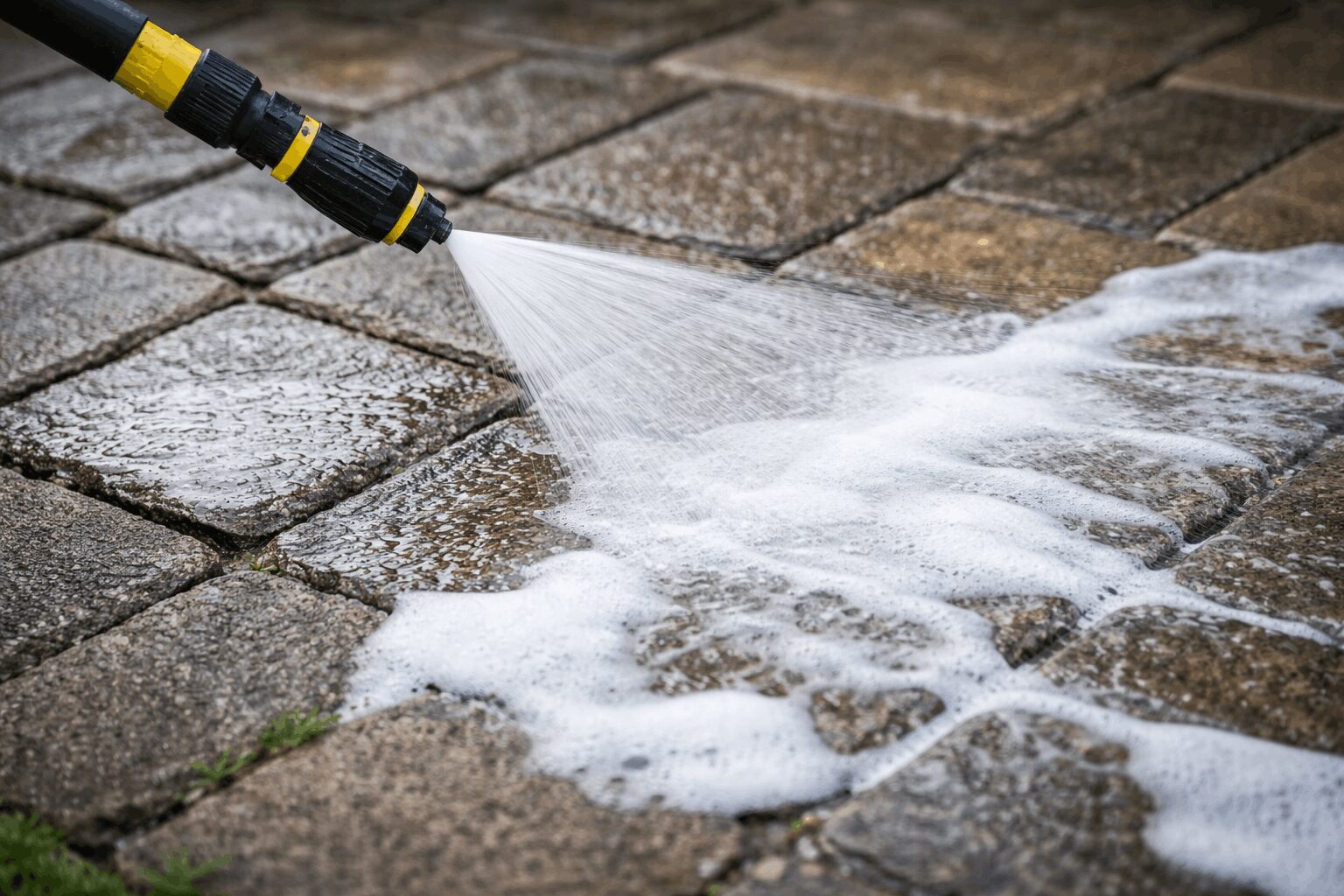
For delicate clay or natural stone pavers, soft washing is the gold standard. Instead of relying on raw mechanical force, this technique uses specialised, biodegradable solutions to kill spores at the root.
Why it works: It treats the cause of the stain (algae and lichen) rather than just blasting the surface.
Many homeowners opt for house washing packages that include soft-washed paths and surrounding areas, to ensure no damage occurs to the landscaping.
2. Re-Sanding and Sealing
The “Achilles heel” of pavers is the gap between them. After a professional clean, it is vital to replenish the jointing sand. This prevents lateral movement and inhibits weed growth. Following this with a high-quality sealer significantly reduces the maintenance difference between the two surfaces, as the protective coating prevents stains from penetrating the material.
Dealing with Queensland-Specific Issues
Whether you have pavers or concrete, our local climate presents unique challenges:
- Mould and Algae: The humidity across Greater Brisbane and the Moreton Bay region creates ideal conditions for black mould and algae growth.
- Regular roof cleaning is often necessary because spores wash down from the roof onto your concrete and pavers during rain.
- Salt Air: For coastal properties, salt can cause “spalling” (flaking) in concrete. Regular rinsing and professional sealing are non-negotiable.
- Solar Runoff: If you have solar panels cleaned, ensure the runoff doesn’t pool on your pavers, as concentrated bird droppings and dust can cause localised staining.
Pavers vs Concrete: Maintenance Comparison Table
| Feature | Concrete Cleaning | Paver Cleaning |
| Primary Method | High-Pressure Cleaning | Soft Washing / Low Pressure |
| Stain Resistance | Low (Porous) | Moderate (Surface dependent) |
| Risk Factor | Surface etching | Loss of joint sand / Wobbly units |
| Longevity Boost | Concrete Sealing | Re-sanding and Sealing |
| Weed Control | Low Maintenance | Requires regular attention |
Why Professional Equipment Matters
Many homeowners attempt a DIY approach with a small electric pressure washer. However, these machines often have low flow rates. Professional-grade equipment, such as that used by QQCPM, is designed for high water volume. This allows for a deeper clean without needing to hold the nozzle so close that it damages the surface.
Whether you are preparing for a gutter cleaning service or a full exterior restoration, the condition of your outdoor surfaces matters. Keeping both pavers and concrete looking their best is one of the most effective ways to lift your home’s street appeal.